20 Saree Poses for Photoshoot at Home (Easy Guide)
20 Saree Poses for Photoshoot at Home (Easy Guide)
Shooting saree photos at home is completely doable with a phone, some natural light, and a few tested poses. Whether you are a shopper wanting festive pictures or a retailer photographing stock for WhatsApp catalogues, the right pose can make an ordinary drape look like a studio shot.
This guide covers practical poses, lighting, backgrounds, and small styling tricks tuned for Indian homes and the way we actually share photos here.
[IMAGE: A woman in a bright silk saree standing near a large window with soft daylight, taken on a phone camera]
What are the easiest saree poses for photoshoot at home?
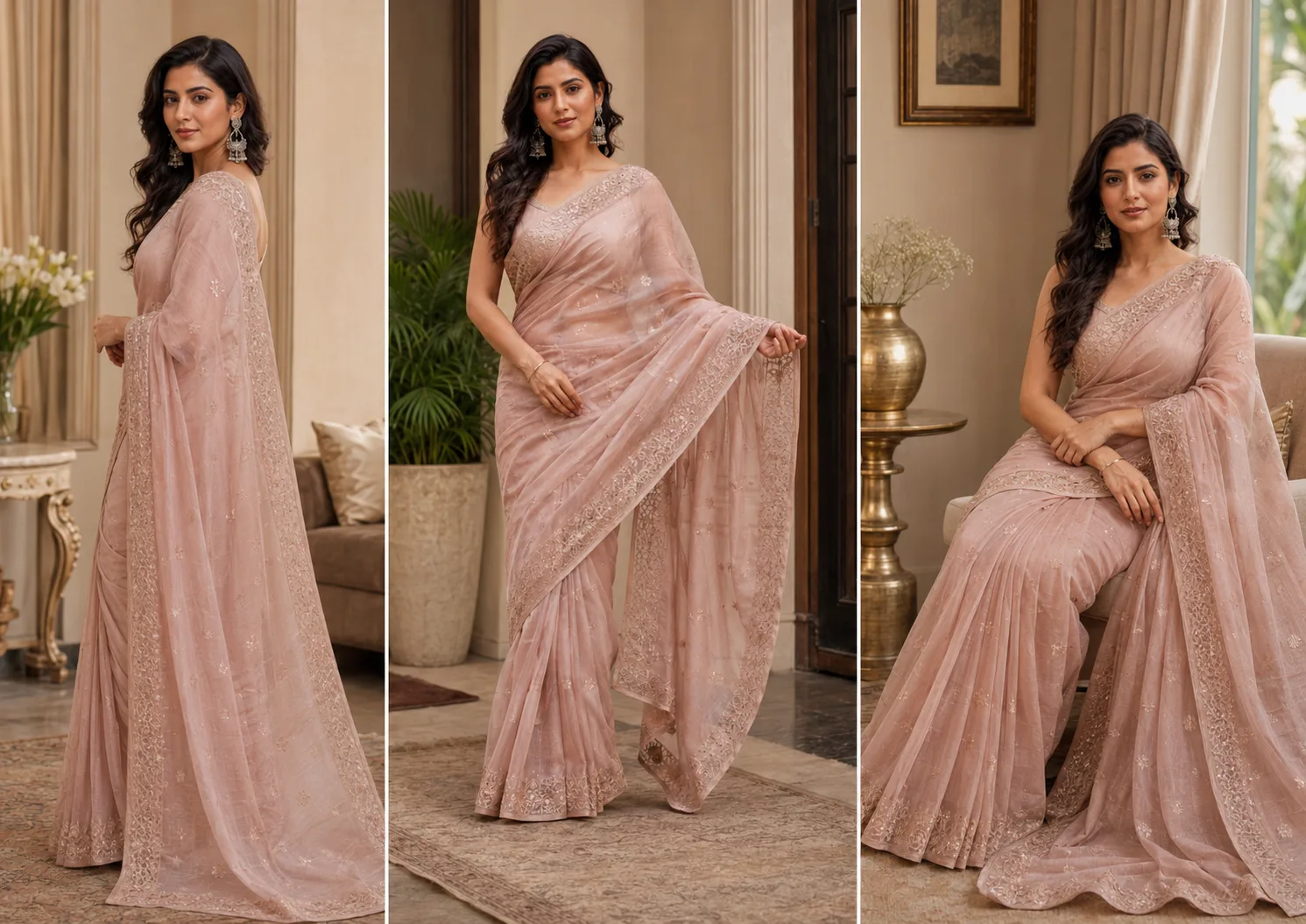
The easiest poses are the standing side-profile, the pallu-hold, and the seated drape. These three work in almost any room and hide common problems like awkward hands or an uneven backdrop.
For the side-profile, stand at a slight angle to the camera with one foot forward. This instantly slims the frame and shows off the saree's fall and border.
The pallu-hold is a classic for a reason. Gently gather the pallu in one hand and lift it slightly, letting the fabric and zari catch the light. This works beautifully for Kanjeevaram, Banarasi, and other festive sarees during Diwali or wedding season.
The seated drape suits heavier silk sarees. Sit on a low stool or the floor, arrange the pleats in a fan around you, and rest your hands loosely in your lap. It reads elegant and needs zero balance or effort.
[IMAGE: Three-panel comparison showing side-profile, pallu-hold, and seated saree pose in a home setting]
How do I pose to make my saree look expensive?
To make a saree look premium, focus on the border, the pallu drape, and clean posture. Expensive-looking photos come from showing fabric detail clearly, not from the saree's actual price.
Always angle your body so the border runs diagonally across the frame. A diagonal line pulls the eye across the whole drape and highlights weave or embroidery.
Keep your shoulders back and chin slightly forward and down. This single adjustment removes the slouch that flattens most home photos.
Use your hands with intention. Resting a hand near the waist pleats or lightly touching the pallu adds a natural, catalogue-style finish. Avoid stiff arms glued to your sides.
For retailers, tight crops on the pallu, blouse work, and border are as valuable as full-length shots. Buyers on WhatsApp often decide based on zoomed-in detail, so shoot both wide and close.
What are good saree poses for retailers selling on WhatsApp?
Retailers should shoot a clean full-length pose, a pallu-detail pose, and a border close-up for every saree. This trio answers the questions customers ask most before buying on WhatsApp or Instagram.
Start with a straight full-length shot on a plain wall so the colour reads accurately. Colour accuracy matters because customers routinely message asking if the shade is the same in person.
Next, capture the pallu spread out or held up, showing motifs and pattern repeats. This is often the deciding image for silk and designer pieces.
Finally, a close crop of the border and blouse work. Buyers zoom in to judge zari quality, so give them a sharp, well-lit detail shot upfront and cut down on back-and-forth chats.
If you sell across regions, consider one shot on a model or mannequin and one flat-lay. Flat-lays load fast and are easy to forward in WhatsApp groups and Broadcast lists.
[IMAGE: Flat-lay of a folded saree with pallu fanned out and border detail visible, shot from above on a plain floor]
When you have a single clean product photo, a tool like QuadraPost lets you turn it into several campaign-ready image and video options in your brand colours, so you can post consistently without reshooting every festival.
Which poses work for a home photoshoot without a photographer?
Self-shot poses work best when you use a timer, a stable surface, and poses that do not need someone directing you. The key is setting up once and shooting many frames.
Prop your phone on a stack of books, a tripod, or a windowsill at chest height. Use the 3 or 10 second timer, or the burst mode, so you can settle into the pose naturally.
Good solo poses include looking away from the camera over your shoulder, adjusting your pallu as if mid-movement, and a simple hands-on-waist stance. These feel candid and forgive the fact that nobody is guiding you.
Walking poses also work well on timer. Take a small step forward as the shutter fires so the saree pleats move, adding life to an otherwise static home shot.
Shoot in bursts of ten to fifteen frames per pose. You will delete most, but one or two will look genuinely professional, which is the whole point.
What background and lighting should I use at home?
Use soft daylight from a window and a plain, uncluttered background. This combination alone fixes most amateur saree photos taken indoors.
Stand facing the window, not with your back to it, so light falls evenly on your face and fabric. Backlighting from a window usually turns you into a dark silhouette on a phone.
For backgrounds, a plain painted wall, a curtain, or a wooden door all work. During festivals, a simple diya, marigold string, or rangoli edge adds context for Diwali or Pongal posts without cluttering the frame.
Avoid harsh midday tube-light and mixed lighting. Yellow ceiling bulbs combined with white daylight create odd colour casts that make a red saree look orange and a pink look muddy.
If your wall is busy, shoot closer and tighter. A cropped pose against a small clean patch beats a full-length shot ruined by a cluttered background.
[IMAGE: Woman posing in a saree facing a window with a plain wall behind her and a small diya on a side table]
How can retailers create festive saree campaigns quickly?
Retailers can build festive campaigns fast by shooting one strong base photo and then adapting it for each occasion. Reshooting for Diwali, Karva Chauth, Navratri, and wedding season separately is slow and expensive.
Plan around the calendar. Indian saree demand spikes around Navratri, Diwali, Dhanteras, wedding months, and regional festivals like Onam and Durga Puja, so prepare visuals a couple of weeks ahead.
Keep your branding consistent. Using the same colours, logo placement, and caption style across posts makes your small store look established and trustworthy in crowded WhatsApp and Instagram feeds.
This is where QuadraPost fits naturally: upload a real saree photo and generate editable image or video campaign variations using your brand colours and tone, so a single shoot can cover an entire festival season.
Batch your work. Photograph five or six sarees in one session, then schedule the posts across the week rather than uploading everything at once and disappearing.
What common mistakes should I avoid in saree photos?
The biggest mistakes are poor lighting, cluttered backgrounds, and stiff, unvaried posing. Fixing these three raises the quality of home saree photos more than any expensive camera.
Do not shoot against a strong light source behind you, and do not rely on yellow overhead bulbs alone. Both wreck colour and detail.
Avoid repeating the exact same front-facing pose for every saree. Buyers scrolling a catalogue notice sameness, and it makes the collection feel small.
Do not over-edit. Heavy filters distort colour, and customers feel cheated when the real saree does not match the photo. This directly leads to returns and unhappy WhatsApp messages.
Finally, do not forget the details. Missing pallu and border close-ups is the most common gap in retailer photos, and it is exactly the information buyers want most.
Final Tips Before You Start
Start with one saree, one window, and three poses. Master the side-profile, pallu-hold, and seated drape, then expand once you are comfortable.
Shoot more frames than you think you need, review on a larger screen if possible, and keep only the sharp, well-lit ones. Good saree photos at home come from patient selection as much as posing.
Ready to turn one saree photo into a full festive campaign? Upload a real product photo and generate editable image and video ad options in your own brand colours and tone. Create your campaign on QuadraPost.
FAQ
Can I take good saree photos at home with just a phone?
Yes. A recent smartphone, soft daylight from a window, a plain background, and a timer or tripod are enough for boutique-quality saree photos. Poses and lighting matter far more than the camera itself.
What is the best time of day to shoot saree photos at home?
Mid-morning or late afternoon daylight works best, since the light is soft and even. Avoid harsh midday sun and yellow ceiling bulbs, as both distort saree colours, especially reds and pinks.
Which saree poses help retailers sell faster on WhatsApp?
A clean full-length shot for accurate colour, a pallu-detail shot for motifs, and a border close-up for zari quality. This trio answers buyers' most common questions and reduces back-and-forth messaging.
How do I make an affordable saree look expensive in photos?
Angle the border diagonally across the frame, keep your posture clean with shoulders back, use intentional hand placement, and capture sharp close-ups of the weave. Clear detail and good lighting make any saree look premium.